Elderly caregiver jobs in Azerbaijan: finding work and starting safely
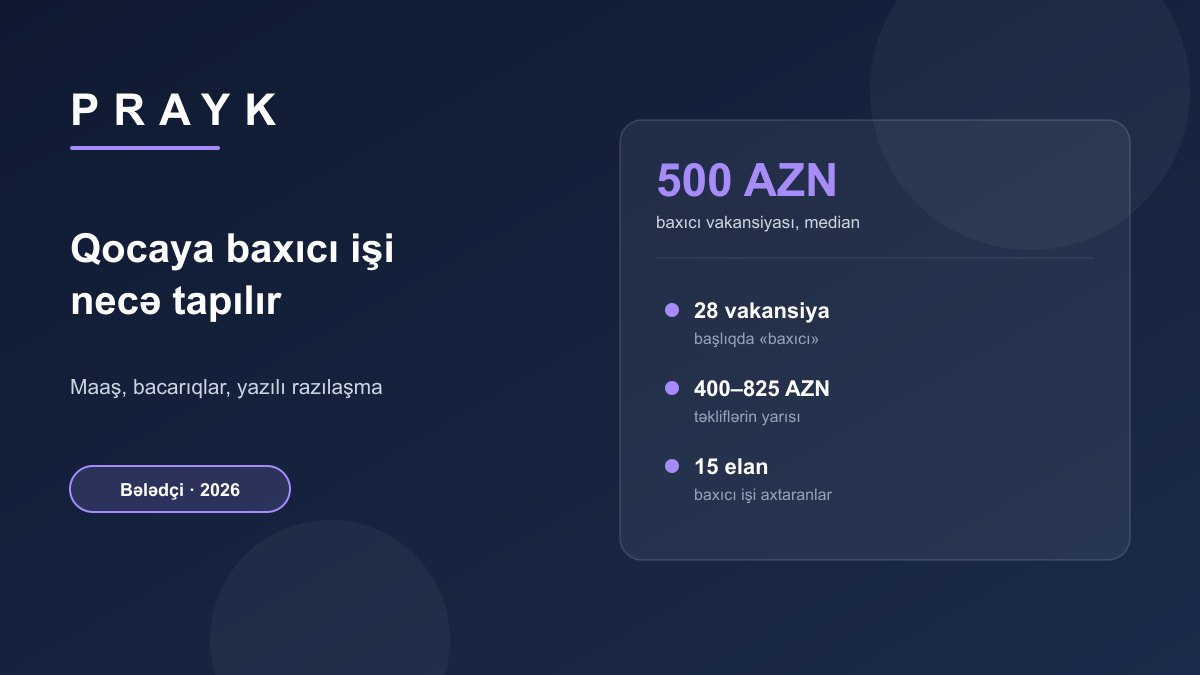
There are three realistic ways to find work as a caregiver for an elderly person: respond to vacancies from families and companies, post your own job-seeker listing, and use the state employment services. As of 22 September 2026, Prayk has 28 vacancies with "baxıcı" (caregiver) in the title, and the median offered monthly salary is 500 AZN. The most important step before you start is to agree duties, hours and pay in writing.
Short answer: as of 22 September 2026, Prayk has 28 caregiver vacancies; the median offer is 500 AZN and half of the listings are between 400 and 825 AZN. The 8 vacancies looking specifically for a patient caregiver state 450–2,000 AZN a month. In 15 listings from people seeking caregiver work, half of the requested amounts are between 500 and 1,000 AZN. 20 of the vacancies are in Baku and 6 in Ganja.
What does an elderly caregiver do?
The job is closer to household and social care than to medicine. A good reference point is the Social Services Agency's description of home (mobile) social services: the social care worker's tasks there include helping to cook (including special diets), feeding a person who cannot manage alone, helping with bathing and hair care, changing bed linen, washing and ironing, cleaning the flat, buying food and helping with utility payments.
In a family setting, this usually also includes company, walks, reminders about the medication schedule prescribed by the doctor, and telling relatives about changes in the person's condition. Injections, IV drips, dressings and catheters are a medical worker's job: if you have no medical training, say so clearly in the agreement and advise the family to consult a doctor.
What work formats are there?
| Format | What it looks like | Clarify in advance |
|---|---|---|
| Daily visits | You arrive in the morning and go home in the evening | Exact hours, travel costs, lunch break |
| Live-in | You spend most of the week in the same home as the elderly person | Your own sleeping space, night waking, days off |
| Shift-based | Listings say "növbəli qrafik" (shift schedule) or "6/1" | Shift length, who covers for you |
| Hourly | A few hours of help several times a week | Minimum hours, rules for last-minute cancellations |
How much are caregivers offered?
The figures are a snapshot of the Prayk catalogue on 22 September 2026. In a vacancy, the listing price is the offered monthly salary; in a job-seeker listing, it is the amount the candidate is asking for.
| Metric | Listings | Median | Range |
|---|---|---|---|
| Vacancies: "baxıcı" in the title (elderly, patients, children) | 28 | 500 AZN | middle half 400–825 AZN |
| Vacancies: "patient caregiver" | 8 | — | 450–2,000 AZN |
| Job seekers: caregiver listings | 15 | — | middle half 500–1,000 AZN |
| Nannies and caregivers services | 71 | — | mostly childcare; daily and monthly amounts mixed |
The samples are small, so treat the ranges as a guide. Pay usually goes up for a bedridden person (lifting, turning, hygiene), night shifts, living in, extra housework, experience with people who have memory problems, and a second language. Some candidates quote a daily rate, so check the unit when comparing with monthly offers. Under an official full-time employment contract, pay cannot be below the 400 manat minimum wage in force since 1 January 2025.
What skills and documents do you need?
- Patience and communication. Calm daily conversation and answering the same question many times are a big part of the job.
- Safe lifting and hygiene. Lifting, turning and bathing a person risks back injury, so learn the correct technique.
- Simple and special-diet cooking. Salt-free, sugar-free or soft food is often needed.
- First aid basics. A short course teaches you what to do in an emergency and what to tell the 103 ambulance line. You can find courses in Education and courses.
- Documents. ID card, references from previous families (with phone numbers), and a copy of your diploma if you have medical training. Some families may also ask for a health certificate.
People registered as job seekers with the State Employment Agency can also use vocational training courses and career advice (DOST centres, 142 call centre).
How to find a vacancy
- Browse vacancies. Families usually post caregiver jobs in Domestic staff and cleaning vacancies. Set a city filter and save the search — you will be notified as soon as a new listing appears. Caregiver vacancies are few, so the first person to call has an edge.
- Present yourself. Post a listing in Job search — Domestic staff and cleaning: your age, how many years and with what kind of clients you have worked, your district, format (daily, live-in, shifts), languages and what you do not do. Your number is masked in the listing and protected from spam calls.
- Offer it as a service. Most of the 71 listings in Nannies and caregivers are childcare; there are few elderly-care offers, so competition is weaker.
- State channels. The State Employment Agency's vacancy database and career advisers are available at DOST centres.
How families choose a candidate and what they check is covered in our guide to hiring a patient caregiver. Reading it will help you prepare for the interview.
Starting safely: what should the agreement say?
If a company, clinic or agency hires you, under the Labour Code the employment contract must be concluded in the electronic information system (Articles 7 and 44); you can check it on the e-Sosial portal. Probation is at most three months (Article 51), and normal working time is 8 hours a day and 40 a week (Article 89). If you agree directly with a family, draw up at least a written agreement in two copies signed by both sides:
- a list of duties and of what you do not do (for example, medical procedures, renovating the whole home);
- working hours, days off, night waking and public holidays;
- the salary, payday and payment method, and pay for trial days;
- how many days' notice each side gives before ending the arrangement;
- an emergency plan: relatives' and doctor's phone numbers, 103;
- how money for groceries and medicine is accounted for (receipts).
When should you be cautious?
An intermediary who demands an upfront "registration" or "training" fee, an employer who wants to keep your ID card "as a deposit", a promise to pay "after three months", and a family that avoids a written agreement are all serious warning signs. When someone asks for payment or card details in a chat, Prayk automatically shows a warning to both sides.
Frequently asked questions
How much does an elderly caregiver earn in Azerbaijan?
As of 22 September 2026, the 28 caregiver vacancies on Prayk have a median offered monthly salary of 500 AZN, with half of the listings between 400 and 825 AZN. Caring for a bedridden person, night shifts and living in usually raise the amount. The 8 vacancies for a patient caregiver state 450–2,000 AZN.
Can I work as a caregiver without experience?
Yes, but it is easier to start with an elderly person who moves around independently, in a daily-visit format. A first aid course, safe lifting technique and references from people you know help you earn a family's trust.
Is a live-in caregiver entitled to days off?
Under an employment contract, working-time limits are protected by law: no more than 8 hours a day and 40 hours a week. In a direct arrangement with a family, agree days off, night waking and who covers for you in writing beforehand.
Can a caregiver give injections or prescribe medicine?
Medicine is prescribed by a doctor; a caregiver can only give reminders about the prescribed schedule. Injections, drips, dressings and catheters are a medical worker's job, so without medical training you should decline and suggest the family talk to a doctor.
What documents do I need for caregiver work?
The main document is an ID card. You may also be asked for references from previous families with contact details, a diploma if you have medical training and, in some cases, a health certificate. In official employment, the contract is concluded in the electronic system.
Sources and methodology
Prayk figures were taken on 22 September 2026 from the catalogue's public API: vacancies with "baxıcı" and "xəstə baxıcı" (patient caregiver) in the title, job-seeker listings with "baxıcı" in the title, and the Nannies and caregivers services section. Medians and the middle half (25th–75th percentiles) were calculated only from AZN listings with amounts above zero; no median is given for samples smaller than 15. Vacancies with "baxıcı" in the title also include nannies and animal carers, so the figures are approximate. Official sources: Labour Code (Articles 7, 44, 51, 89), the ministry's notice on the minimum wage, e-Sosial: employment contract registration, Social Services Agency: home (mobile) social services, State Employment Agency.